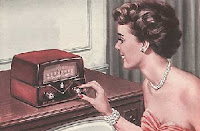
Found this article as I was scouring the political feeds. I'm all for more independent radio! The perfect station for me? Independent news and radio dramas- and maybe a little indy music in the mix. Talk and stories would reign, though. :-)
Guess I had better get back to my world-domination plan...
Creating Radio for the People By Amy Goodman, King Features Syndicate
Posted on August 8, 2007, Printed on August 9, 2007
Rupert Murdoch is looking like the cat that ate the canary with his successful takeover of Dow Jones & Co. and its flagship newspaper, The Wall Street Journal. Media conglomerates like Murdoch's News Corp. are among the most powerful corporations on the planet. His papers beat the drums for war while distracting with gossip and glitz.
Yet people are finding innovative ways to fight back, to demand independent, community-based media. One such effort that you can join is the movement to create new, full-power, noncommercial FM radio stations in the U.S.
This is a once-in-a-generation opportunity. The Federal Communications Commission will open a one-week window, Oct. 12-19, during which nonprofit community groups in the U.S. can file applications.
Think for a moment what a powerful, noncommercial radio station could do in your community. As the late George Gerbner, dean of the Annenberg School for Communication, said, we need a media not run by "corporations that have nothing to tell and everything to sell, that are raising our children today."
Community radio is the antidote to that small circle of pundits featured on all the networks, who know so little about so much, explaining the world to us and getting it so wrong. On community radio, you can hear your neighbors, you can hear people from your community: the silenced majority, silenced by the corporate media.
Pacifica Radio, the network where I got my start, is the oldest public broadcasting network in the United States, founded in 1949 by conscientious objectors like Lew Hill. He created the concept of "listener-sponsored" radio -- the radical concept that quality programming could be put out over the air that would be so different and so valuable to the audience that the listeners would give money to keep it going, and they have, all over the country.
After Pacifica station KPFT went on the air in Houston in 1970, its transmitter was blown up, twice; it is the only U.S. radio station to have suffered such crimes. The transmitter was destroyed by the Ku Klux Klan. Why? Because the station allowed people to speak for themselves, and that challenges stereotypes and caricatures, which fuel hate groups like the KKK.
Pacifica Radio is now part of a national coalition,
RadioForPeople.org, that is helping groups file for their own radio licenses. You can check out the availability of a license by entering your ZIP code at the website
getradio.org.
Independent community radio provided critical coverage of the invasion and occupation of Iraq. While Cumulus Media was banning the Dixie Chicks for daring to speak out against war, Clear Channel radio stations were sponsoring prowar rallies around the country. Roxanne (Walker) Cordonier, the South Carolina Broadcasters Association's 2002 radio personality of the year, was fired by Clear Channel-owned station WMYI-FM in Greenville, S.C.
"I was fired for being antiwar," she told me. "I was told to shut up. People who retained their employment had the presence of mind to keep quiet." She sued, and Clear Channel settled with her just before trial (for a sum said to be about a year's salary). Four years later, she is back on the air, now buying airtime on a locally owned station. "People forget," she says, "these are the public airwaves, and the public is not getting access to them."
From coast to coast, from Alaska to Hawaii to Florida to Maine, people are organizing to reclaim a small portion of the public airwaves. The October FCC application window for full-power, noncommercial FM licenses is an opportunity to make a meaningful, long-term contribution to your local media landscape -- to help give a voice to the voiceless, to carry on the fine tradition of Pacifica Radio, to create a beacon for truth under which people can discuss the most important issues of the day: war and peace, life and death. Check out
getradio.org. Start your own community radio station, and wipe that smile off Rupert Murdoch's face.
Amy Goodman is the host of the nationally syndicated radio news program, Democracy Now!

 From Podiobooker:


